Skip to content
Bonzer specialists working on glossary content and search visibility
Content Subscription

Glossaries and knowledge hubs

When you are the one explaining the terms of your field, the rankings and the AI answers follow.

What glossaries and knowledge hubs are

A glossary or knowledge hub is a connected reference work on your own domain: the terms your market searches for, explained precisely and gathered in one place. It is one of the most overlooked ways to build topical authority, and a standing delivery in our Content Subscription.

Every entry answers a question your audience actually asks. Together they cover your field closely enough that search engines and language models learn to connect your domain with the subject, and that connection is what authority is made of.

Which is the whole point. When ChatGPT, Perplexity or AI Overviews explain a term from your industry, the explanation comes from somewhere. The glossary is your bid to be that somewhere.

Bonzer specialist working on visibility in AI search
Why it matters

Definitions are not small traffic. They are the foundation under your authority.

Searches for terms sit early in almost every buying journey. Whoever explains the term most clearly earns the click, and becomes the domain the search engine learns to associate with the subject. Cover your field systematically and the authority rubs off on the rest of your [SEO](/seo): category pages, product pages, and all the other content that has to carry the business.

The same dynamic runs through AI search. Language models build their answers from entities and the relationships between them, and a well-built glossary is precisely that: the terms of your field, defined and connected. It makes you the source AI answers cite, and not just one result among many.

Book a call
How we build the glossary

From mapping to reference work, term by term.

We open by mapping the vocabulary of your field: what does your market search for, which terms do AI answers already explain, and where are those definitions pulled from today, from competitors or from generic reference sites?

Then we prioritize. Terms close to your product with real demand come first, and every entry is written to answer the question precisely: the short answer at the top, the depth underneath, and internal links to the pages where the term turns into business.

We build the whole thing as one connected cluster with consistent structure and markup, so crawlers and language models can read it as a single subject. And because Morrison, our own AI content ops platform, knows your site and your tone of voice, the quality holds even when the glossary passes a hundred entries.

What you get

What the glossary is built from

A map of the terms that define your field: demand, search intent, and who owns the explanations today, in the search engines and in AI answers. We prioritize by how close the terms sit to your business, and build the glossary from the inside out.

The Bonzer office where the term landscape is mapped
When it pays off most

Strongest in specialist industries where the definitions are still there to take.

You sell something that needs explaining: software, finance, law, engineering. Your customers search for the terminology long before they search for you, and every entry is an early meeting where you can show that you know your subject.

Or you already run a Baseline and produce good content, but you are missing the layer that ties the topics together. A knowledge hub closes the gaps in your coverage systematically, a whole subject at a time.

What separates a glossary that works from one that gathers dust

A definition has to answer before it elaborates. So every entry leads with the short answer, because that is the format featured snippets and AI answers both lift out. The depth sits underneath for the reader who wants to go further.

Terms connect to each other, and the entries have to do the same. We link terms, synonyms and related entities internally, so the search engine reads your field as one coherent subject rather than a scattering of single pages.

The glossary must never become an island. Every entry links on to the category pages, services or guides where the term turns into business, so traffic arriving early in the journey always has a natural next step.

The author matters. Definitions with a visible specialist behind them, a clear update date and consistent quality carry weight in E-E-A-T, and that is often the difference between being cited and being skipped.

A field moves, and a good glossary moves with it. New terms arrive, older definitions get adjusted, and we prioritize the entries closest to winning. Pages sitting mid page one are faster gains than brand new topics.

We measure the whole chain: rankings and traffic in classic search, citations and visibility in AI answers, and where the glossary traffic travels on the rest of the site. Contractbook is the clearest example, and it sits in our cases.


Next step

Do you want to be where your market looks up the terms?

Free SEO analysis

Frequently asked questions

Related cases

When you own the language of your field.

A glossary or knowledge hub gathers the questions of an industry in one place and builds authority that both Google and the language models reward. Here are three examples of how far that can carry.

  • Cover from the Contractbook case
    Contractbook
    +1,288%conversions from organic traffic

    Contractbook

    A dictionary of legal terms, a template archive and a blog, each built for its own search intent. Contractbook now owns the vocabulary of contract management, and organic traffic grew 482% in a year.

  • Cover from the Pleo case
    Pleo
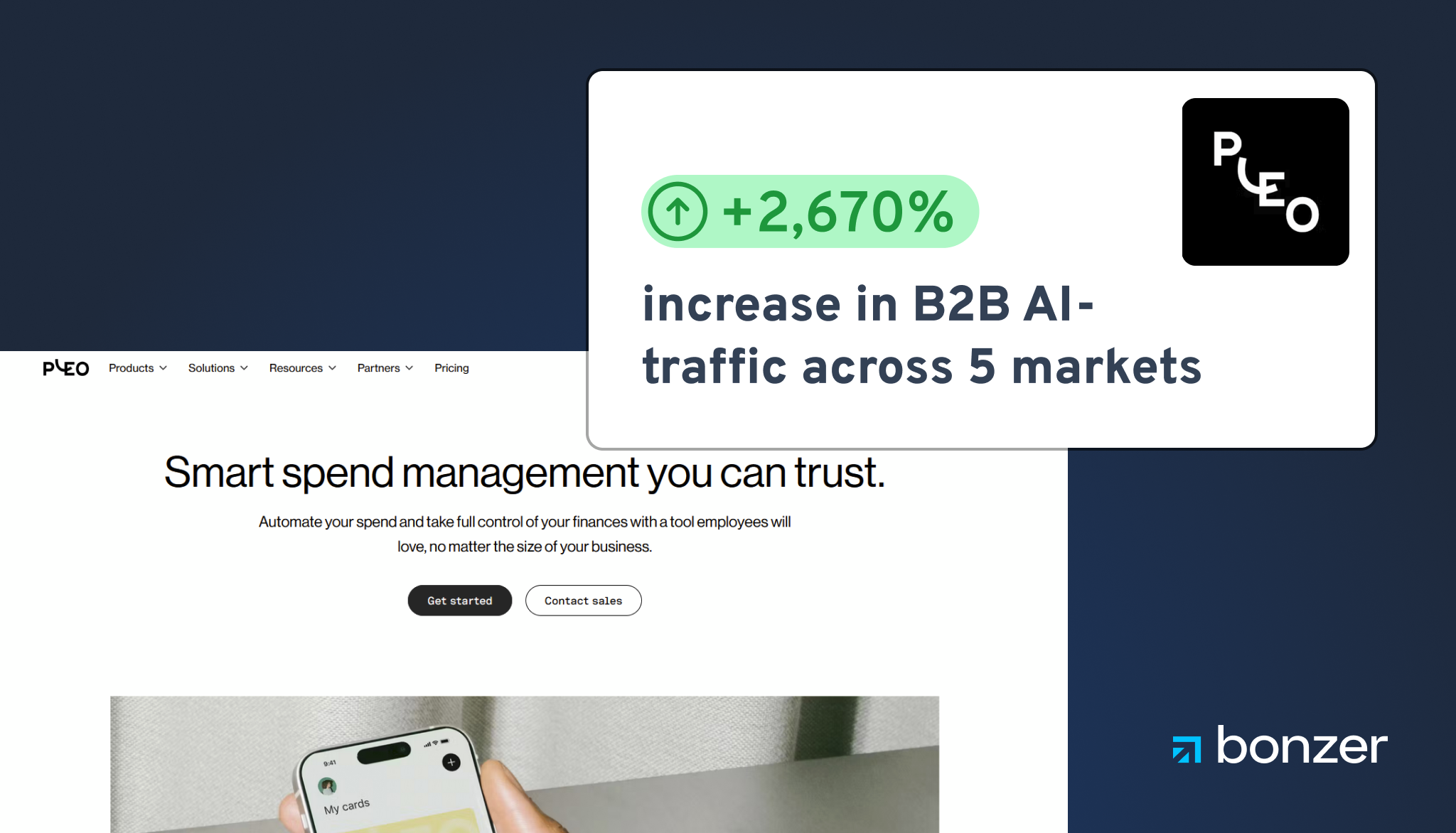
    +2,670%referral traffic from AI Search

    Pleo

    Pillars and clusters covering the language of business spend across five markets. When buyers ask an AI how spend management works, Pleo is the source that comes back.

  • Cover from the Tiimo case
    Tiimo
    +657%more key events from ChatGPT

    Tiimo

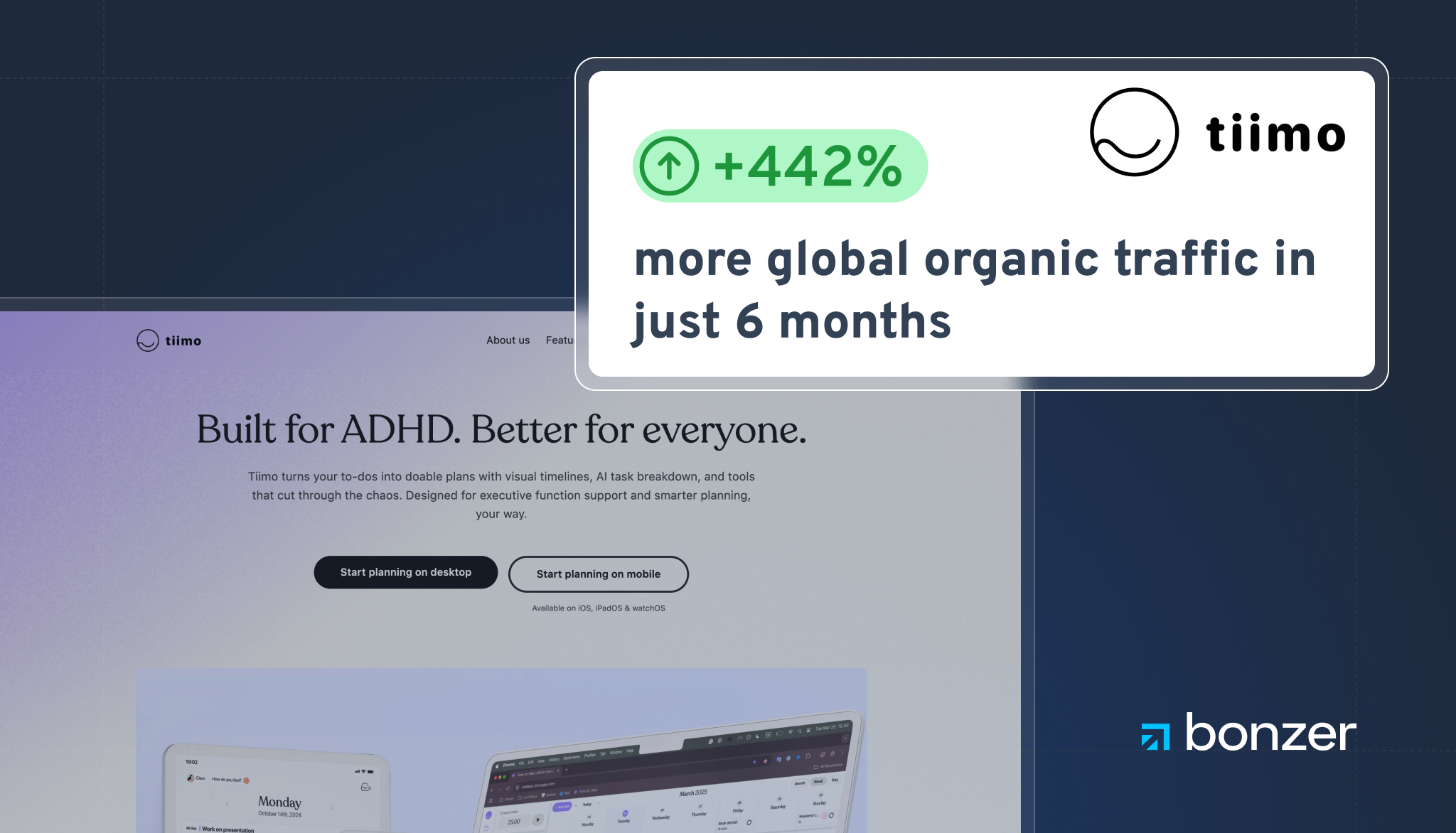
    Explaining ADHD precisely, and with the expertise to back it, made Tiimo a source in AI Overviews and ChatGPT. Organic traffic grew +442% in six months.

Frederik Thyssen

Get a clear view of your potential

An informal analysis of your domain. Classic search and AI-search.

Free SEO analysis

Based on experience from more than 3,000 analyses and 1,000+ companies