


+418%organic keywords in positions 1-3
Pleo
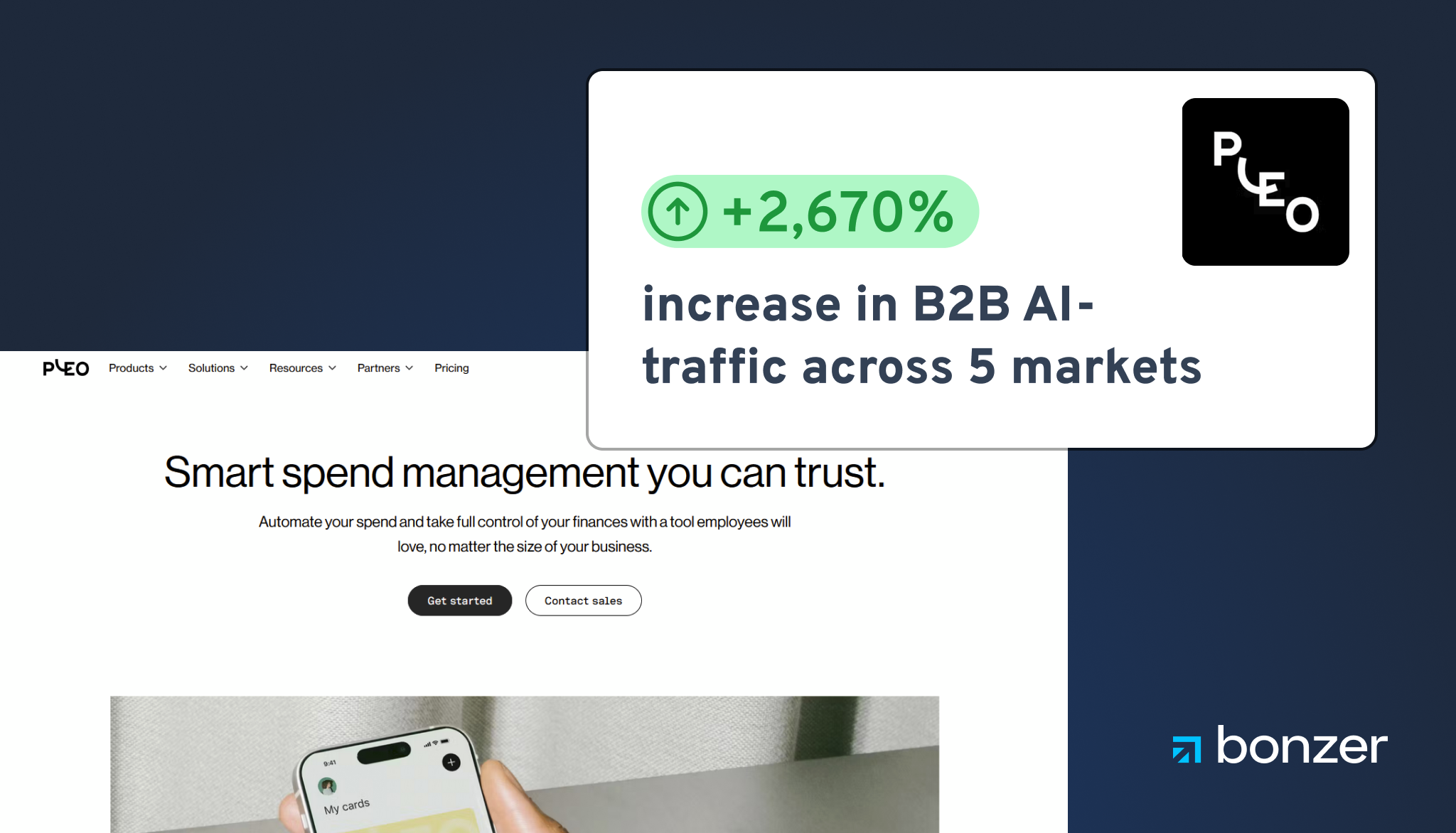
Five dedicated content strategies and high content velocity gave Pleo market-leading topical authority across five markets.

Content production is a focused engagement where a prioritized plan turns into published pages. We build clusters that answer real search intent, write them in your tone of voice, and publish only once you have signed off. It usually runs as a sprint on top of your Baseline.
Every piece is written with one specific intent in mind: the question your market actually asks. That is the quality that earns rankings in search engines, and it is what makes you the source an AI answer cites.
You own the direction, we run the production. From brief to publish, the work sits with us, so your time goes where only you can help: approving the expertise, the angle and the voice.
Most teams already know what needs writing. Production is the bottleneck: briefs sit untouched, clusters end up half built, and the plan ages faster than anyone can execute it.
Search engines and AI answers both reward depth over scattered one-off articles. Whoever covers a topic best, coherently and with real substance, becomes the preferred source. That is why we produce in clusters instead of single pieces.
We start from your prioritized plan. Each page gets a brief: the intent it answers, the angle, the entities it has to cover, and how it links to the rest of the cluster. If the plan does not exist yet, we build the SEO prioritization first.
Production runs with our specialists and Morrison behind them, our own AI content ops platform. It has read your entire website, learns your brand from your own documents, and connects directly to your performance data. That gives us pace without giving up precision.
Nothing goes live without your approval. You read, adjust and sign off, and we publish with meta, internal linking and structure in place. Then we measure, and let the results shape the next round.
A plan for each cluster: which pages to build, which intent each one answers, and how they link together, so the topic gets covered fully instead of in fragments.

You have a keyword analysis or a well-stocked content backlog, but the in-house team cannot produce at the pace the plan deserves. An engagement creates momentum now, without hiring your way there.
You already publish, but visibility is not following. Usually the content is not built in clusters, or not aimed at the right intent, and then changing the shape helps more than raising the volume.
Search intent comes first. Every text has to answer the question behind the search. Get the right words in without giving a real answer, and the page ends up as filler in the index.
We build in clusters, because that is how authority forms. Pages that cover a topic coherently and link to each other with purpose send the same signal to search engines and to the models picking their sources: this subject is covered properly here.
Your tone of voice sits in the brief from the start. We learn the voice from your existing material, calibrate on the first deliveries, and you approve everything before it is published.
E-E-A-T is built in. Your experience and expertise have to be visible in the text. Real examples, clear definitions and quotable paragraphs make the content credible to readers and easy to lift into an AI answer.
We measure what carries weight: rankings, organic traffic, and whether you get named when ChatGPT, Perplexity or AI Overviews answer questions in your market. Pages sitting mid page one are usually the fastest wins, and they get prioritized accordingly.
Results feed back into the plan. What works gets more depth, what does not gets a new angle. Our cases show where that way of working ends up over time.
We agree that at the start, and it follows the plan. A typical sprint covers a full cluster: one core page and the supporting pages around it. We prioritize depth and coherence over volume, because that is what moves rankings.
A typical engagement runs 4–6 weeks from kick-off to a published cluster, depending on scope and your approval process. The first texts are usually ready for review within the first couple of weeks.
Less than you might expect, though not zero. You spend time on the kick-off, on sharing subject-matter knowledge where it is relevant, and on reviewing and approving. Research, writing, structure and publishing sit with us.
By specialists, with Morrison behind them, our own AI content ops platform. It has read your entire website, knows your brand from your own documents and connects directly to your data. Every text is shaped and fact-checked by a specialist, and you approve it before anything goes live.
We learn it from your existing pages, brand guides and material, then calibrate on the first deliveries. Your feedback on those first texts is planned for from the start, and it makes the next batch sharper.
Production runs on a prioritized plan, so in some form, yes. If you already have one, we start from it. If you do not, we build the prioritization as part of the kick-off or through your Baseline.
We track rankings, organic traffic and visibility in AI answers cluster by cluster and report on it as we go. Those numbers then decide what the next engagement builds on.
Content production has to be readable in rankings and traffic. Here are three collaborations where the plan became published content, and the content became measurable results.
Five dedicated content strategies and high content velocity gave Pleo market-leading topical authority across five markets.

A dictionary, a template archive and a blog, each built for a different search intent, turned content into Contractbook's steadiest growth channel.
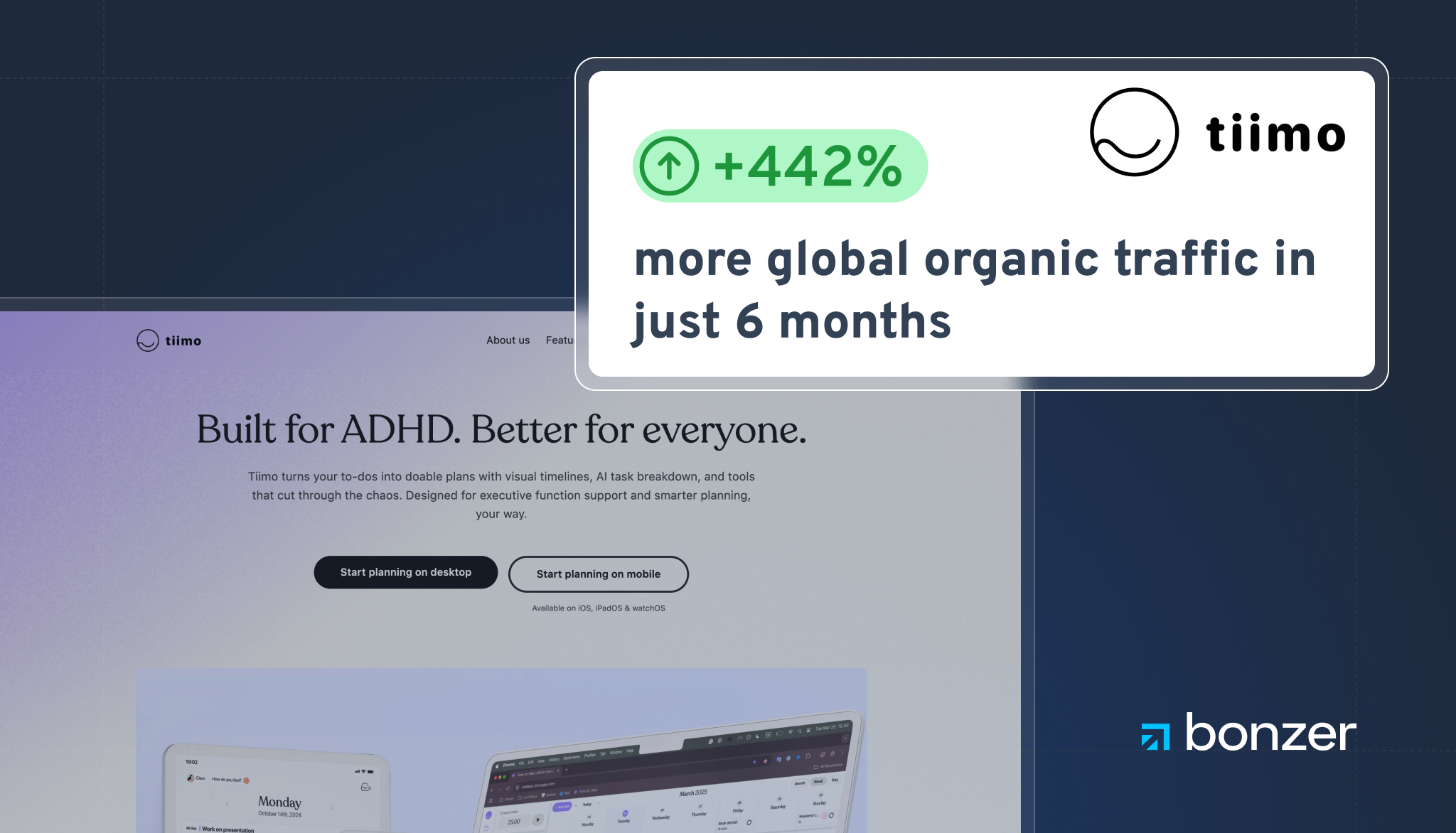

Six months of E-E-A-T driven content took Tiimo from 188 to 812 keywords on page 1 of Google, and into AI Overviews and ChatGPT answers about ADHD.

An informal analysis of your domain. Classic search and AI-search.
Free SEO analysisBased on experience from more than 3,000 analyses and 1,000+ companies