

+331%page 1 rankings on Google
Tiimo
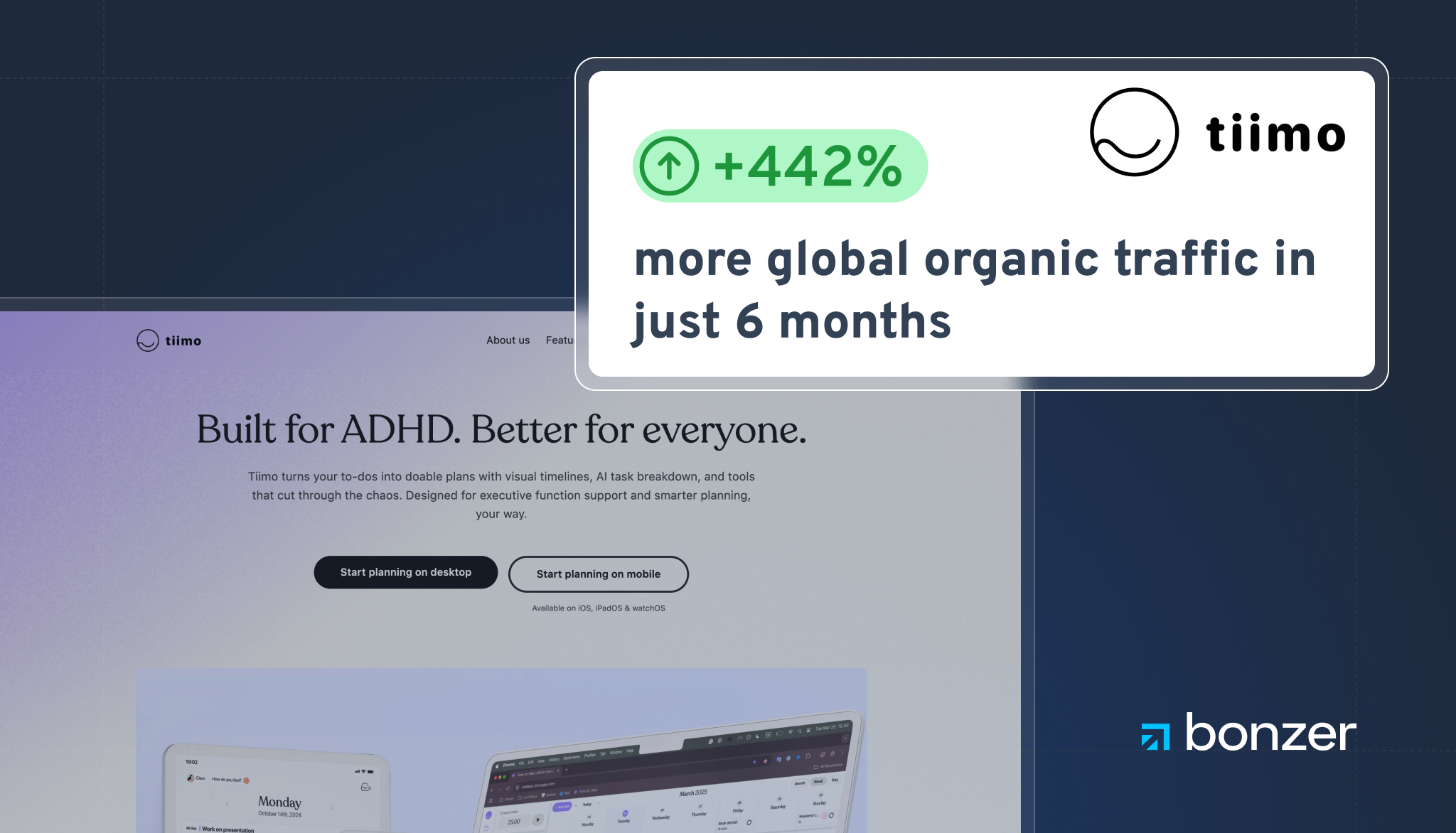
Informative content on everyday life with ADHD, built on E-E-A-T, took Tiimo into AI Overviews and ChatGPT answers and grew organic traffic +442% in six months.

Guides and information pages answer everything your customers ask about before they are ready to buy. We build them as connected clusters based on search intent and entities, so they win rankings in classic search and become the source AI answers cite. The work usually runs in a Content Subscription on top of your Baseline.
Most purchases start with a question, not with a product name. People search for the problem long before they know the solution, and whoever gives the best answer along the way is the one they remember when the decision arrives. Search has always worked like that, and AI answers have only made it more visible.
So we treat every guide as a long-term investment. Each page gets one clear job: to answer a real search well enough that readers, search engines and language models all pick it as their source. And a page that has won that position keeps working for you, month after month.

Long before anyone searches for your product, they search for the problem. They google symptoms, compare methods and ask ChatGPT for advice, and every answer they meet along the way helps decide which companies even make the shortlist. If you are not part of that conversation, the choice gets made without you.
The good news is that classic search and AI answers draw on the same raw material: content with clear structure, precise entities and expertise you can feel. Build it properly and the same page wins rankings in the search engines and citations in AI Overviews, ChatGPT and Perplexity. You write once and get found in both places.
We start in the searches in your market: which questions get asked, what intent sits behind them, and where are the gaps between what people look for and what you can answer today? The prioritization is hidden in there, long before anyone opens a content calendar.
Then we produce. Every guide is built on a structured brief with angle, entities and internal linking, written in your tone of voice and checked for professional accuracy before it reaches you for approval. Morrison, our own platform, has read your entire website and learned your brand from your own documents, so the content sounds like you and builds on what you have already said.
And we do not drop the pages once they are live. We follow rankings and citations in AI answers, update the pages sitting close to the top, and build further on the clusters that are gaining ground. That is how guides and information pages become a growing engine rather than an archive.
A plan covering the questions your market asks: split by intent, gathered into clusters and prioritized by commercial value. You always know what is being produced, why it was chosen, and what it is meant to achieve in search and AI answers.

Your customers read, compare and ask around before they reach out. In that phase, guides and information pages are your voice in the conversation, and whoever holds the answers also holds a seat at the table when the supplier is picked. We usually lay that foundation in a Baseline.
Or you have commercial pages that perform well but no layer of knowledge around them. Guides build the topical authority that lifts the whole domain, and focused sprints can put speed behind the clusters that matter most.
It all starts with intent. A guide is only good if it answers the real question behind the search, in the order the reader needs the answers. Land next to the intent and neither length nor keywords will save it.
The structure has to carry the content: clear headings, definitions that can stand alone, and entities named precisely. That makes the page easy to decode for people, for search engines, and for the AI models that assemble their answers from sources they can rely on.
The expertise has to be felt. E-E-A-T is the impression a page leaves: real examples, correct terminology and answers that obviously come from real experience. Search engines and AI answers both treat that kind of content as authority.
Standalone articles rarely move anything in SEO. The pages have to hang together in clusters with internal linking, so every new answer strengthens the others and the domain builds topical authority around the subjects you want to be known for.
Upkeep often beats new production. Pages sitting mid page one are faster gains than new topics, and updated guides hold on to their citations in AI answers while competing content quietly ages.
Finally we measure what counts: rankings and traffic per cluster, visibility in AI answers, and how traffic travels on to your commercial pages. That is the groundwork under a good deal of what you can read in our cases.
Guides, information pages, definitions and FAQ content, everything that answers questions before the purchase. Commercial landing pages and product descriptions are a separate discipline, but we build the guides so they link meaningfully into them.
A blog is often driven by the calendar. Guides and information pages are driven by demand. Every page is built for a specific search and intent, belongs to a cluster, and gets maintained. That is the difference between publishing something and owning the answer.
It depends on the size of the subscription and how broad your market is. We agree a fixed pace from the start, so you know exactly what is delivered each month, and the prioritization makes sure the most valuable questions are taken first.
A subject-matter review and your approval, nothing beyond that. We drive the research, the briefs, the production and the structure, but your knowledge makes the content sharper, and nothing is published before you have approved it.
We follow rankings and traffic per cluster, citations and visibility in AI answers, and how readers move on to your commercial pages. Guides and information pages work as a portfolio: the sum is what moves the domain, and the measurement shows you where.
The content is created by specialists with our own platform Morrison behind them. Morrison has read your entire website and learned your brand from your own documents, but the angle, the expertise and the quality sit with people, and you approve everything before publishing.
Some answers end inside the chat window, but the sources decide which brands get named and remembered. And the same content wins rankings in classic search, where the clicks still are.
Your customers google and ask the AI long before they reach out. Here are three collaborations where guides and information pages turned specialist knowledge into visibility and traffic.
Informative content on everyday life with ADHD, built on E-E-A-T, took Tiimo into AI Overviews and ChatGPT answers and grew organic traffic +442% in six months.

Informative content aimed at three separate search intents, from legal definitions to practical templates, grew conversions from organic traffic 1,288%.
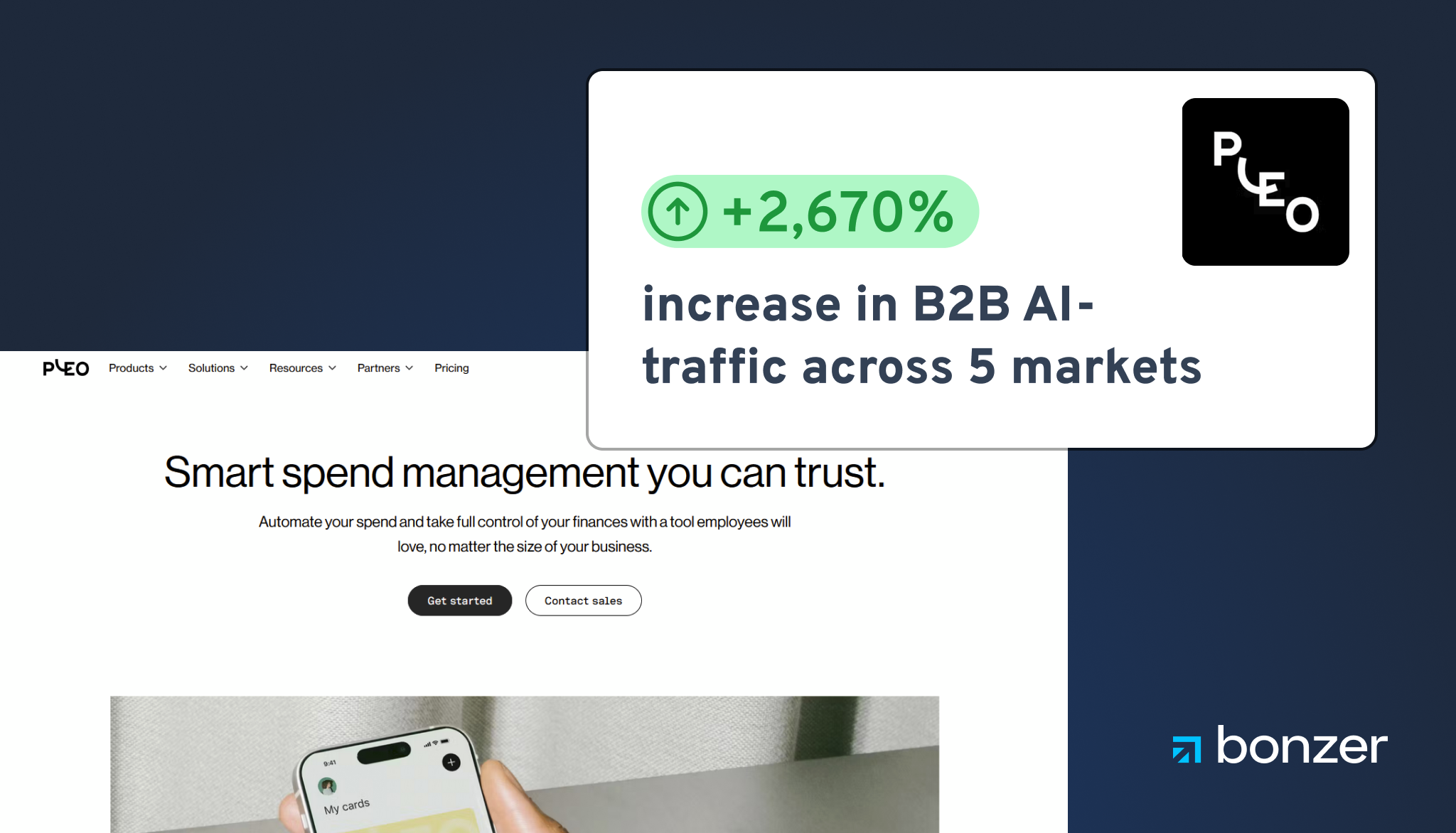

Pillars and clusters answering the questions finance teams ask before they choose a spend solution, in five markets and five languages.

An informal analysis of your domain. Classic search and AI-search.
Free SEO analysisBased on experience from more than 3,000 analyses and 1,000+ companies